

Hegegemeinschaft, Germany|Sole product & UI designer|2025
A mobile tool for Germany's legally fixed hunting quotas
Design of a field-use iOS tool for a German game-management association — tracking legally assigned cull quotas across associations, hunting districts, and every species, sex and age class within them. Sole designer, from IA to shipped UI.
01 — Overview
A reporting duty, turned into something usable in a forest.
German hunting associations are assigned a cull quota by law — a fixed number of animals per species, sex and age class, allocated across the hunting districts that make up the association. Every animal taken has to be recorded against that allocation.
The association ran this on paper and in spreadsheets. The totals were correct at the end of the season and effectively unknowable during it. The design problem was not reporting — it was making the remaining quota legible at the moment somebody is standing in a forest, on a phone, deciding whether they are still allowed to take an animal.
The whole product is this card, repeated.
71,7 %
Gruppe 01
46
82,1 %
Gruppe 02
106
82,1 %
Gruppe 03
106
Three associations, three tints — the only wayfinding this product has.
Hegegemeinschaft
One quota, many districts, one number everyone reports against.
02 — The Challenge
A number that has to be right, kept by people in a forest.
In Germany, hunting is not open season. Every Hegegemeinschaft — a legally constituted game-management association — is assigned a fixed cull quota, broken down by species, sex and age class. Members are required to record every animal taken and report against that quota.
Before the app, this ran on paper and in spreadsheets. Nobody could answer the one question that actually matters mid-season — how much of the quota is left, right now, for this class, in this district — without adding it up by hand.
03 — Information architecture
Structure follows the regulation, not the menu.
The hierarchy in the app is the hierarchy in the law. Nothing is flattened for the sake of a shorter path, because the quota itself is defined at the deepest level — and that's the level where a hunter has to log an animal.
Helvetica Neue
Regular
Used throughout the product interface.
a b c d e f g h i j k
m n o p q r s t u v
w x y z
0 1 2 3 4 5 6 7 8 9
The tint lightens as you descend
Each group owns a three-step ramp, applied by depth: the group card carries the strongest step, a nested card the middle one, an inner row the lightest.
level 01 — group card
level 02 — Revier
level 03 — Hirsche & Tiere
Fixed across all three groups
Green always reads as quota remaining, whichever group colour surrounds it.
quota
Festgesetzter Abschuss
taken
Durchgeführter Abschuss
remaining
Noch Frei — still permitted
over quota
negative Noch Frei
04 — The repeating unit
One card, learned once, read at every level.
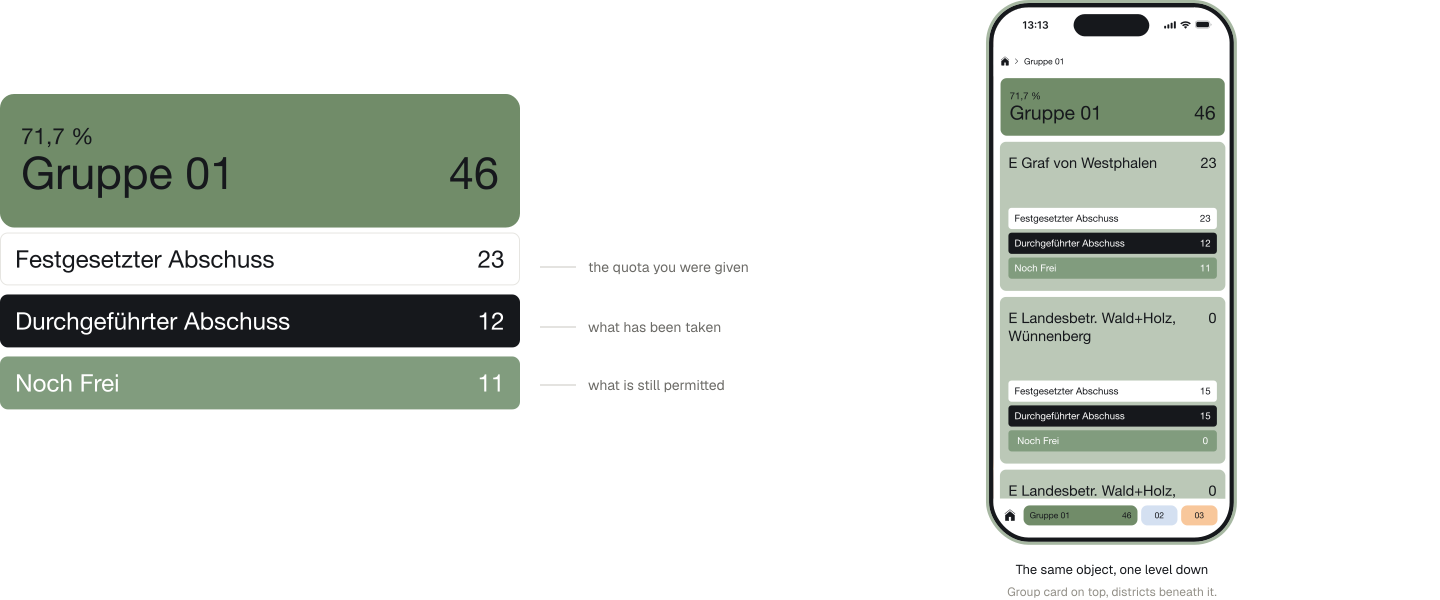
Group, district, species — all three render as the same object: a tinted header carrying the name and running total, then three status rows in a fixed, never-reordered sequence.
Those same three tints have been running down the left edge of this
case study since the first section — you have been navigating by them
without being told.
05 — The system in practice
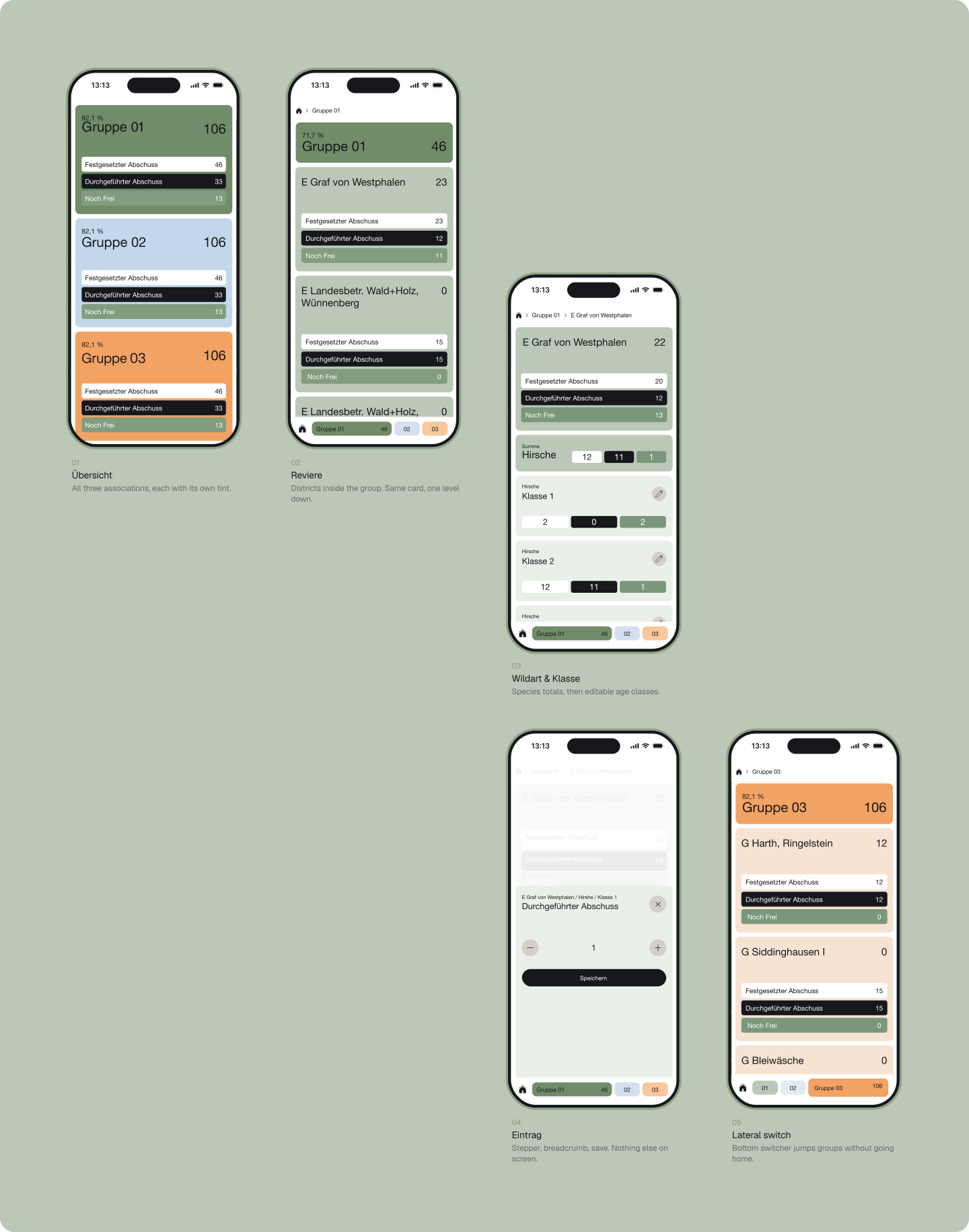
Four taps from association to a single logged animal.
Start at the group level. Pick a district. Zoom into one species. Find one animal. Each tap narrows the view; each screen shows what's still permitted in that scope.
06 — Edge case
You can't un-shoot an animal.
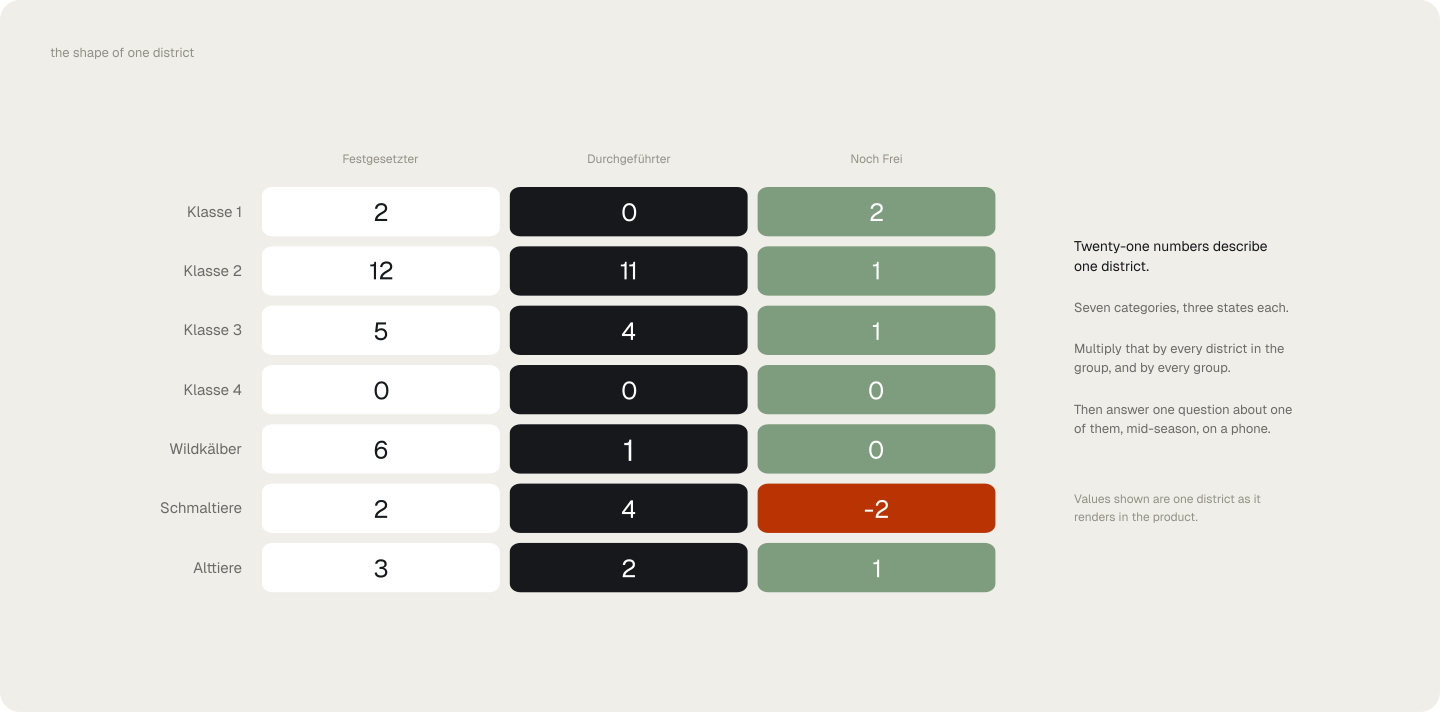
Schmaltiere in this district: quota of 2, four taken. The remainder is −2.
The system doesn't block the entry and it doesn't silently clamp to zero. It records what happened and turns red.
That was a deliberate call. A tool used for legal reporting has to be able to show a breach — hiding it would make the record useless at exactly the moment it matters.
One row, three points in a season
Tiere
Schmaltiere
Tiere
Schmaltiere
Tiere
Schmaltiere
Nothing taken yet. Two still permitted.
Quota met exactly. Nothing left.
Two beyond the limit. The row turns red.
No brand system to steward, no stakeholders to align. A legal constraint, a deeply nested data structure, and the job of making both readable at a glance.
Forester — 2025